
my approach
I support youth-serving organizations to build human-centered cultures
Centering human needs and relationships in our schools and organizations is some of the most important work of our time.
We have been conditioned for generations to treat workplaces as machines and people as parts. To shave down the most authentic parts of ourselves to fit into the box of professionalism.
There’s a real gap between the human-centered cultures that many of us are trying to create in our organizations and the ways we’ve been conditioned to behave in these spaces. Intention isn’t enough: we need real strategies and real support to make real change.

humanizing organizational cultures
My work is grounded in a developmental model that recognizes sustainable culture change happens from the inside out.

Grounded leaders
Before we can show up skillfully for others, we must first cultivate our own inner capacity. This means building self-awareness, learning to regulate our nervous systems, engaging in ongoing reflection, and developing emotional resilience.

culture of belonging
With a foundation of individual grounding, we work to build spaces where people can show up authentically. This requires fostering genuine connection, creating predictability and consistency, building psychological safety, and making our differences visible and valuable.

compassionate support
When we start with grounded leadership and relational safety, we can navigate difficult conversations, practice accountability, address conflict, and offer emotional support with presence and skill rather than reacting, avoiding, or shutting down.
what it looks like in practice
The framework operates as an integrated approach. All three levels reinforce each other: grounded leaders create the conditions for relational safety, cultures of belonging make it possible to navigate hard moments, and practicing compassionate support deepens both individual capacity and collective trust.
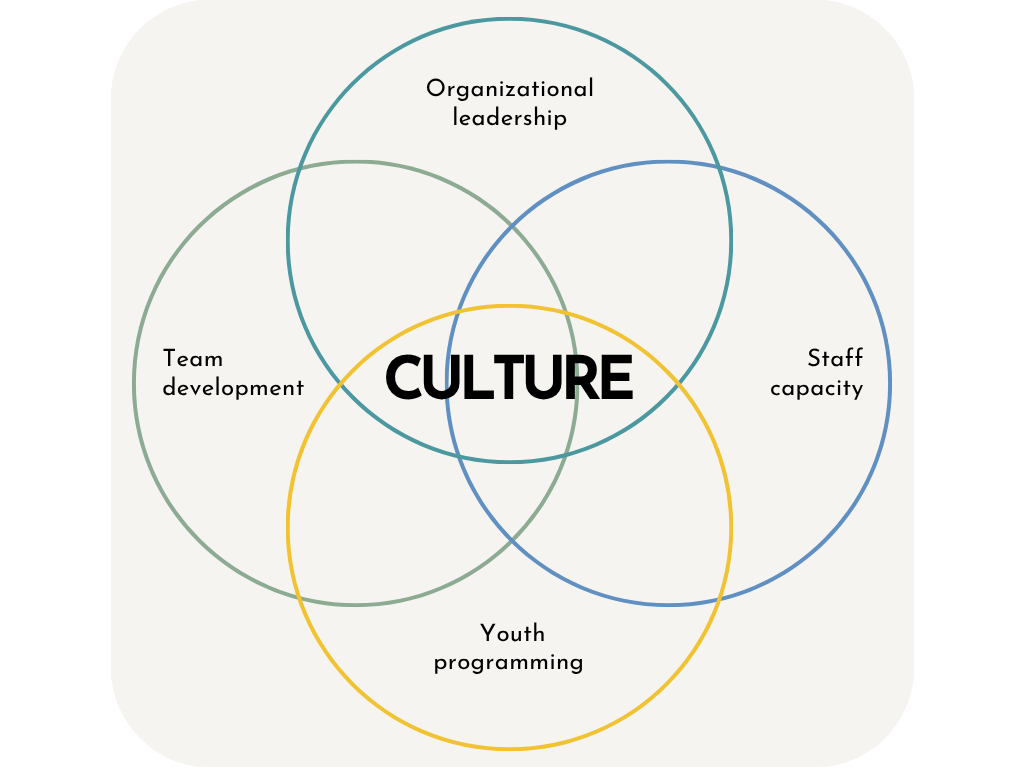
Young people need grounded adults who model regulation and authenticity and communities where they feel they belong. They have opportunities to develop nervous system awareness, relational skills, and strategies to navigate hard moments.
Youth programming
Frontline youth leaders act as supportive mentors by practicing grounding strategies so they can co-regulate with youth and tend to their own well-being. They build authentic relationships with young people while communicating high expectations and providing emotional support.
Staff capacity
Staff teams practice self-awareness and regulation so they can collaborate from a balanced state. They build trust and psychological safety, practice clear communication, and develop skills to navigate conflict, give feedback, and hold each other accountable.
team development
Organizational leadership
Leaders embody grounded presence, intentionally build cultures of belonging, and create systems that support compassion and accountability so the entire system aligns with human-centered values.